Bedding & Sleep
Finding the Right Down Pillow: Loft, Support and Sleep Position
A pillow can feel wonderfully soft in your hands and still leave you waking with a stiff neck. The difference often comes down to loft, support and how the pillow works with your sleep position, body shape and mattress. Here’s how to make sense of down fill and find a height that feels comfortable through the night.
Published 17 November 2026
The small detail that can change how a night feels
When you’re choosing bedding, it’s easy to give the most attention to the mattress or the sheets. Yet the pillow is the layer that supports your head and neck for hours at a time. If its height is poorly matched to your body and sleeping position, even a beautifully made pillow may feel uncomfortable. Too much loft can tip the head upward; too little can let it fall toward the mattress.
Down pillows are appealing for their light, yielding feel and their ability to be shaped and fluffed. But “soft” does not automatically mean “right,” and a pillow’s label rarely tells the whole story. Fill type, fill quantity, construction and the way the pillow responds to pressure all affect its feel. The most useful question isn’t simply whether a pillow is soft or firm. It’s whether it keeps your head and neck in a comfortable, supported position while you sleep.
That answer is personal. Sleep position is a helpful starting point, but it is not the only factor. Shoulder width, head size, how much you move overnight, and whether your mattress lets your shoulder sink all influence the loft that may feel best. Think of pillow shopping as a process of finding a comfortable fit, rather than chasing a universal “best” pillow.
What pillow loft means
Loft is the pillow’s height, especially when it is resting on the bed and supporting your head. A high-loft pillow holds the head farther from the mattress; a low-loft pillow keeps it closer. Loft can change under the weight of your head, so the height you see when a pillow is plumped up is not necessarily the height it maintains during sleep.
Down is soft and compressible, which means it tends to settle under pressure. A pillow may look lofty when it is freshly fluffed, then compress as you lie down. This is part of its inviting, cushioned character, but it matters when you need consistent support. Consider how the pillow feels once your head is resting on it—not just how full it appears on the bed.
Some pillows use down alone, while others combine down with feathers or other materials. The exact blend, fill quantity and chamber design can all affect how easily the pillow compresses, how much it springs back, and whether the fill stays evenly distributed. Check the product information carefully, since “down pillow” does not always describe one identical construction.
Start with your sleep position
Your usual sleep position offers a practical first clue because each position creates a different space between your head and the mattress. The goal is generally to keep the head and neck in a relaxed, neutral alignment—not pushed sharply up, down or sideways. A pillow should fill the space comfortably without forcing your body into a pose that feels strained.
Side sleepers: room for the shoulder
Side sleepers often need more loft than back or stomach sleepers because the shoulder creates a wider gap between the head and mattress. A pillow that is too low may allow the head to angle down toward the bed. One that is too high can push it upward. Either mismatch may feel awkward, particularly when you stay in the same position for a long stretch.
Shoulder width and mattress firmness make a difference. A broader shoulder may require more space to be filled, while a mattress that lets the shoulder sink deeply can reduce the gap. A firmer mattress may allow less sinking, changing how much height feels comfortable. Rather than relying on a standard “side sleeper” recommendation, notice whether your head seems level with your spine when you settle in naturally.
Because down compresses, a very soft, low-density pillow may not maintain the height a side sleeper expects. If you like a plush surface, look for a construction that still offers enough loft under pressure. The aim is not to make the pillow feel rigid; it is to find a balance between a cushioned top layer and enough support to prevent the head from sinking too far.
Back sleepers: a moderate, comfortable lift
Back sleepers often find a moderate loft comfortable, though the right height depends on the individual and the way the pillow compresses. Too much height may angle the head forward, while too little may leave it tipped back. A pillow should support the natural curve at the neck without pushing the chin toward the chest or leaving the head unsupported.
Down’s malleability can be useful here: some sleepers prefer to gently shape the fill so the pillow supports the neck and cups the head. However, if a pillow flattens quickly or moves away from the area where you need support, its softness may not deliver the steady feel you want. Try to assess the pillow after it has settled rather than judging it only by its initial fluffiness.
Stomach sleepers: keep the profile low
Stomach sleepers typically need less loft because the head is already turned to one side. A thick pillow can raise the head and increase the angle through the neck. A low, soft pillow may feel more comfortable for some people, while others prefer little or no pillow under the head. Individual comfort varies, so pay attention to whether your neck feels relaxed rather than assuming that more cushioning is always better.
Down can be shaped and compressed, but a pillow that begins at a high loft may still feel too tall even after it is pressed down. If you usually sleep on your stomach, prioritize a low profile and easy compression over dramatic fullness.
Combination sleepers: think about movement
If you change positions during the night, a pillow that works in one posture may feel less suitable in another. A very high pillow could suit your side-sleeping moments but feel excessive when you turn onto your back. A highly compressible pillow may adapt in several positions, but could also lose support more than you like.
Consider which position you spend the most time in and which transitions feel uncomfortable. Some people keep more than one pillow option available, but a single pillow may still work well if its loft and fill respond comfortably across their usual positions. What matters is how it feels in real use, not a label that promises to suit every sleeper.
Why your mattress and body shape matter
Sleep-position advice is a useful guide, not a measurement chart. Two side sleepers can need different pillow heights because their shoulders, necks and heads are different. Likewise, a pillow can feel very different on a soft mattress than on a firmer one. When a mattress allows the shoulder to sink, the gap beneath the head may be smaller; when it offers a firmer surface, the gap may be greater.
For a more meaningful trial, test a pillow on the mattress you use every night, if possible. Lie in your normal position and allow the fill to settle. Notice whether your head feels centred and whether the pillow stays where you need it. If you must continually fold, bunch or push it into place, that may be a sign that its loft or construction is not a good match for your habits.
Comfort also changes with personal preference. Some people enjoy a plush, enveloping feel; others prefer a pillow that holds a more defined shape. Neither preference is automatically better. It is worth separating the feel of the surface from the support underneath: a pillow can feel soft against the face while still providing enough loft, or feel full at first but collapse too much after a few minutes.
Understanding fill and construction
Down refers to the fine, soft clusters beneath the outer feathers of birds. In bedding, down is valued for its lightness and loft. Different pillows may use different proportions of down and feathers, and those proportions influence the feel. A higher proportion of soft down may produce a more cloud-like sensation, while added feathers can change the pillow’s weight, structure and resilience. Always read the stated fill composition rather than assuming all down pillows behave alike.
Fill amount matters, too. A pillow with more fill may feel fuller, but that does not guarantee better support for every sleeper. The way the fill is arranged can affect whether the pillow keeps its shape or shifts into thin spots. Baffle construction, sewn compartments or other internal designs may be used to help manage fill distribution; product details can explain what a particular pillow includes.
Also consider whether the pillow is described as soft, medium or firm—but treat those terms as a starting point rather than a standard measurement. One maker’s “medium” may not feel the same as another’s. If you can try the pillow, notice how quickly it compresses and how much it rebounds when you lift your head. If you cannot, compare fill details, construction notes, return terms and care instructions before making a decision.
Down and feather fillings are animal-derived. Readers who have ethical, allergy-related or personal concerns may want to review sourcing information and consider whether another fill type better fits their needs. A pillow’s marketing language alone cannot establish that it will suit a particular allergy or health concern; check the material details and seek relevant professional advice when appropriate.
A simple way to assess support at home
A pillow test does not need to be complicated. Lie down in your usual sleeping position, relax your shoulders, and give the pillow a few moments to settle. Notice whether you feel pressure, whether your head is pushed up or allowed to drop, and whether the pillow stays comfortable after you stop adjusting it.
- Check the head position: Does your head feel naturally supported, or do you sense that it is tilted too far toward or away from the mattress?
- Notice the neck: Is the area around your neck relaxed, or are you aware of a persistent bend or strain?
- Assess compression: Does the pillow maintain a comfortable height after several minutes, or does it flatten more than you expected?
- Try your other usual positions: If you move during sleep, see whether the pillow remains comfortable when you turn.
- Observe the morning: Repeated discomfort on waking may be a reason to reassess your pillow, though it can have many causes and is not a diagnosis.
Keep expectations realistic. A pillow cannot solve every sleep problem, and occasional stiffness can have causes beyond bedding. If discomfort is persistent or concerning, a healthcare professional can help assess it. The purpose of a pillow trial is simply to identify whether the pillow itself feels like a comfortable fit for your usual sleep routine.
Care: preserving the feel you chose
Care instructions vary by pillow, so follow the label or manufacturer guidance rather than assuming that every down pillow can be washed in the same way. Some may be suitable for machine washing, while others may require professional cleaning or more limited care. Check the instructions before washing, and make sure the pillow is completely dry if washing is permitted; lingering moisture can affect both comfort and freshness.
Regularly fluffing a down pillow can help redistribute fill and restore some of its loft. Gently shake or pat it rather than twisting it aggressively. A protective pillow cover can help keep the pillow clean between washes, while a pillowcase provides the next washable layer against the skin. Bedding materials such as linen can be a comfortable outer layer for some households, but the pillow’s own care requirements remain separate.
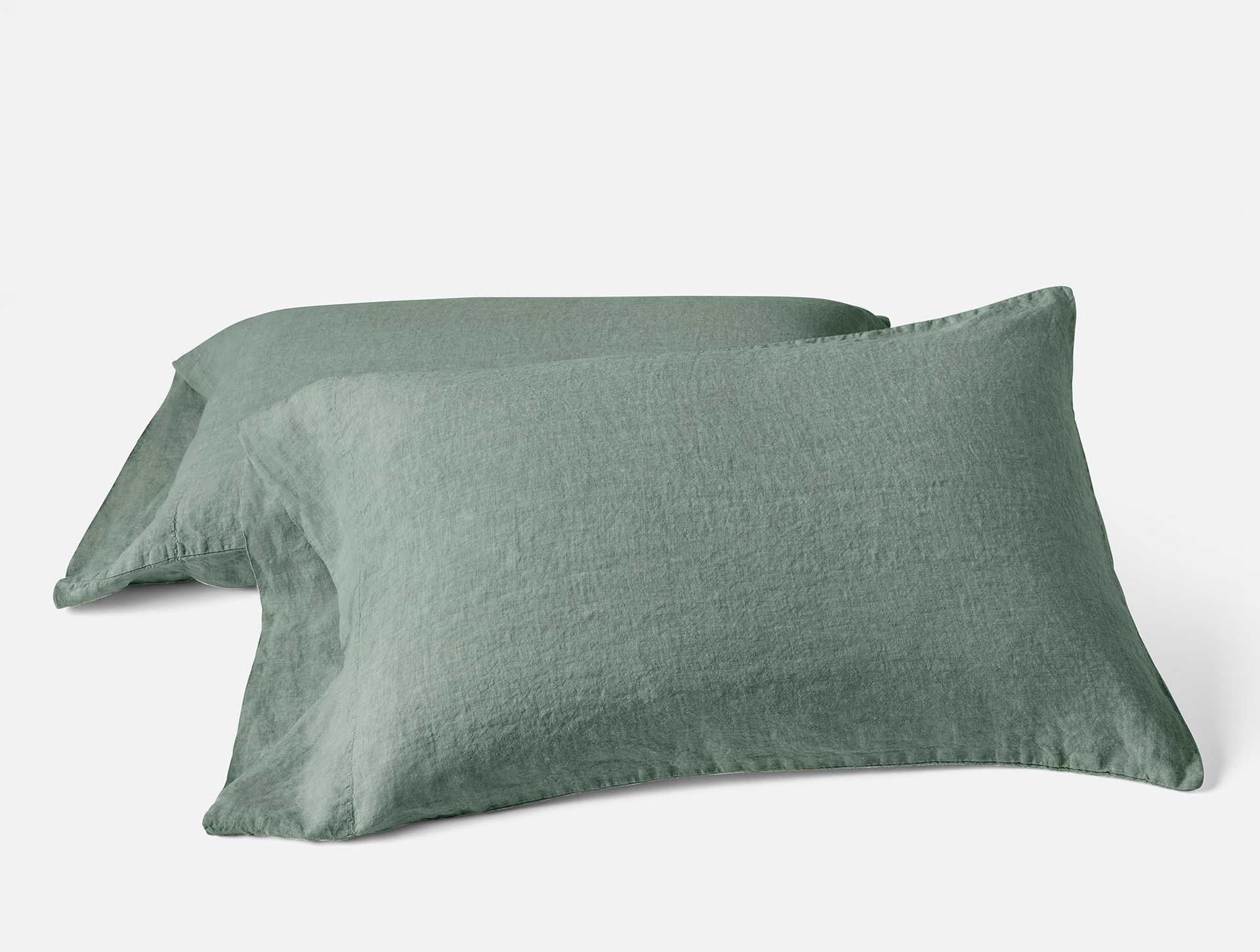
For example, Organic Relaxed Linen Pillowcases are made from GOTS-certified organic flax grown in France and woven into linen in Portugal. Their care guidance calls for a cold, gentle machine wash with like colours, low tumble drying and prompt removal. They are pillowcases rather than pillows, so they do not determine the down fill or loft; they simply provide a breathable textile layer around a pillow that fits their dimensions.
Over time, any pillow may lose shape or feel less supportive. How quickly this happens depends on construction, use and care. If fluffing no longer restores the feel, or the pillow remains lumpy or persistently flat, it may be time to compare its condition with a replacement. There is no single lifespan that applies to every pillow, so let the material’s performance and the manufacturer’s advice guide you.
Common buying mistakes to avoid
Choosing by softness alone. A pillow that feels wonderfully plush in a shop may compress more than you want at home. Consider the height it maintains under your head, not just the sensation when you press it with your hand.
Assuming every side sleeper needs the same loft. Body shape, mattress firmness and fill behaviour all affect the fit. Use sleep position as a starting point and adjust based on your own comfort.
Ignoring dimensions and construction. Pillow size affects how it fits a pillowcase and the bed, while internal construction influences how fill behaves. Check both before choosing.
Overlooking the care label. A pillow that is difficult to clean or maintain may not suit your household routine. Find out whether it can be washed, how it should be dried and what day-to-day care is recommended.
Expecting an immediate perfect answer. A pillow can feel unfamiliar at first, especially if you have been using a very different height or firmness. Give yourself a reasonable chance to assess it, while following any trial or return terms that apply.
A quick checklist before you decide
- Identify your most common sleep position, while accounting for any changes you make overnight.
- Think about how your mattress responds beneath your shoulders and head.
- Compare the pillow’s fill composition, stated firmness and construction details.
- Check whether its loft remains comfortable once the fill compresses under your head.
- Review the care instructions, material sourcing information and relevant return policy.
- Choose based on how supported and comfortable you feel—not on loft alone or a promise that one pillow suits everyone.
The right pillow is the one that fits your night
Finding a down pillow is less about selecting the fullest or softest option and more about matching its loft and support to your body and sleep habits. Side sleepers often start by looking for more height, back sleepers commonly explore a moderate profile, and stomach sleepers tend to prefer a lower one. But mattress firmness, shoulder width, fill blend and personal comfort can shift those starting points.
Look beyond the first impression. Read the construction details, check care requirements and, whenever possible, test the pillow in your usual sleeping position. A well-matched pillow should feel comfortable without demanding constant adjustment. When softness, loft and support work together, the bed feels less like a collection of separate pieces and more like a place your body can settle into night after night.