Bedding guide
How to Choose Pillow Shams: Size, Fabric and Layering with Bovi Hudson
The right pillow shams can make a bed feel considered without making it complicated. Start with the pillow size, then think about texture, fabric, finish and how each layer will work with the bedding you already own.
Published 16 October 2026
Pillow shams are the finishing touch that can turn a stack of pillows into a polished part of the bedroom. They bring colour, texture and shape to the bed, while helping shield pillow inserts from everyday dust and handling. But a beautiful sham is only truly useful if it fits properly, feels right for the room and suits the way you make the bed.
That is where a little planning pays off. A sham that is too small may pull at the seams or flatten an insert; one that is too large can look slack and lose its tailored outline. Fabric matters, too. Smooth cotton, relaxed linen and quilted finishes each create a different mood and require different levels of care. When these choices come together, pillow shams can add depth without competing with sheets, duvets or blankets.
The Bovi Hudson Linen Quilted Shams make a useful example of that balance. Made in Portugal from European linen, they have a diamond-quilted face, a solid border and a smooth cotton percale backing. Their details show how material, texture and construction can shape both the appearance and practical feel of a layered bed.
First, what is a pillow sham?
A pillow sham is a decorative pillow covering, usually designed to be displayed as part of a dressed bed. It may look similar to a pillowcase, but the two typically serve different purposes. A pillowcase is made for regular sleeping and frequent laundering. A sham is often more structured or detailed, with features such as a flange, piping, embroidery, quilting or a carefully finished border.
Shams are commonly placed behind the pillows used for sleeping, although there is no single right arrangement. Some households remove decorative shams at night and return them in the morning; others prefer a simpler arrangement with one or two shams that can stay on the bed. Think about your own routine before choosing elaborate trims or delicate fabrics. A lovely detail is most successful when it fits comfortably into daily life.
Many shams are sold without an insert, so check what is included before ordering. A cover-only design allows you to choose the insert’s size and firmness separately, while a complete decorative pillow arrives ready to use. In either case, the dimensions of the cover and insert need to work together.
Choose the size by measuring the pillow
Size is the essential first check. Pillow names such as standard, king or euro are useful guides, but labels can vary between manufacturers and countries. The actual measurements are more reliable than the name alone. Measure the pillow insert from edge to edge, then compare those dimensions with the sham’s stated size.
A close fit generally creates a fuller, more tailored appearance. An insert that is substantially smaller than its cover can leave empty corners and a limp outline. Conversely, an insert that is too large may strain the seams, distort the shape or make the pillow uncomfortably firm. Follow the maker’s sizing guidance when available; decorative pillow inserts are sometimes intentionally sized slightly larger than the cover to create a plump finish, but that approach should not be assumed for every design.
Before purchasing, make a quick checklist:
- Measure the insert in both directions, including its depth if the shape is unusually full.
- Check whether the product dimensions describe the cover, the finished pillow or the insert.
- Confirm whether the sham is sold individually or as a pair.
- Look for the closure type and allow enough room to insert and remove the pillow easily.
- For a bed with several pillows, check that the sizes will sit together comfortably rather than crowding the headboard.
Standard and king shams are usually associated with rectangular bed pillows, while euro shams are commonly square. Decorative covers may come in a broader range of dimensions. For example, the Bovi Hudson collection is offered in Standard, King, Euro and Grand Euro sizes, making it possible to adapt the arrangement to different beds and pillow combinations. Match the size to the insert you own and the proportions of your bed, not just to a size name.
It can help to lay your pillows on the bed before deciding how many shams to use. A wide bed may comfortably accommodate larger square shams behind sleeping pillows; a smaller bed may look better with a simpler, lower arrangement. Leave enough visible space for the duvet and other bedding to remain part of the composition.
Fabric sets the mood—and the maintenance
Fabric changes how a sham looks, feels and behaves. The best choice depends on the bedroom’s overall style, the other textiles on the bed and how much care you are willing to give decorative pieces. A fabric should look appealing, but it should also make sense for the way the room is used.
Linen: relaxed texture with natural character
Linen has a visible weave and an easy, lived-in quality that works well in both pared-back and layered rooms. Its texture brings depth without requiring a bold print, making it a natural partner for simple sheets and a plain duvet cover. Linen often softens with use and laundering, though the precise feel depends on the fibre, weave, finishing and care routine.
The Bovi Hudson shams use 100% European linen on the quilted face. Their stone-washed finish gives the fabric a softer, relaxed hand, while the quilting adds extra dimension. Linen’s inherent variations are part of its character: the surface can look less uniform than a smooth, tightly finished cotton, which is one reason it pairs so easily with other natural textures.
Cotton: a smooth and familiar counterpoint
Cotton percale is known for a crisp, smooth feel. In the Hudson sham, cotton percale forms the backing, creating a useful contrast with the more textured linen face. This combination is a reminder that a sham does not have to be made from one fabric throughout. A thoughtfully chosen backing can affect the feel in hand and give the piece a different surface against the pillow.
For a coordinated bed, cotton shams can echo cotton sheets or percale duvet covers. They may also help temper a room where several textured materials are already in play. If you prefer bedding that looks smooth and crisp, a plain cotton sham could be a better fit than a pronounced quilted linen design.
Blends and decorative finishes
Some pillow covers combine linen with cotton or other fibres to create a particular weight, texture or colour effect. A textured striped cover, for instance, can bring pattern and a substantial feel to a bed. Check the fibre content rather than relying on a product name: a linen-labelled design may include other fibres, and those can affect both the surface and the care instructions.
Finishes matter just as much as fibre. A flange adds a border around the pillow; piping creates a defined edge; embroidery brings a fine decorative detail; quilting creates raised pattern and extra visual structure. Consider the finish alongside nearby details such as sheet hems, duvet seams and the profile of the headboard. A well-chosen contrast can feel intentional, while several competing trims can make the bed look busy.
Why quilting adds depth to a layered bed
Quilting is more than a pattern. It adds a raised surface that catches light differently from a flat fabric, helping a sham stand out even when its colour is close to the bedding around it. The Bovi Hudson’s diamond quilting gives the linen face a regular pattern, while the solid border frames that pattern and provides a clean transition to the rest of the bed.
That combination can be especially effective when the sheets and duvet are plain. Instead of introducing a strong print, a quilted sham adds interest through shadow, texture and shape. It can also help connect a bed’s soft layers to more structured bedroom elements, such as an upholstered headboard or a neatly folded coverlet.
Quilted shams may feel more substantial than a simple pillowcase, so consider where they will sit and how often they will be handled. They can be a decorative back layer or part of a more relaxed arrangement that remains on the bed. If you like to remove every decorative layer before sleeping, choose a size and quantity that are easy to lift, store and put back.
Build a balanced arrangement, one layer at a time
Layering works best when each element has a clear role. Begin with the practical sleeping pillows, then add shams or decorative pillows in a sequence that suits the bed’s size and the room’s look. More pieces do not automatically make a bed feel more finished. A small number of well-proportioned layers can be more inviting than a crowded row.
A straightforward arrangement
For a calm, easy-to-maintain bed, place sleeping pillows against the headboard and add one pair of shams in front. This keeps the shape simple while giving the bed a more considered finish. If you use a duvet and a coverlet, let the shams connect those layers through a shared colour, fabric or texture.
A fuller, more tailored look
On a larger bed, a deeper arrangement can use larger square shams at the back, followed by sleeping pillows and smaller accents in front. Keep the sizes visibly distinct so the layers read clearly. A quilted linen sham can provide a textured foundation; smoother pillows in front then create contrast without requiring a mix of unrelated patterns.
Use contrast with intention
Contrast can come from colour, material, pattern or finish. If the duvet is smooth and pale, a quilted linen sham can add texture while staying within a restrained palette. If the bedding already has stripes or embroidery, a solid-colour sham may be the quieter choice. Repeating one element—such as a natural fibre or a shade already present in the room—helps the arrangement feel connected.
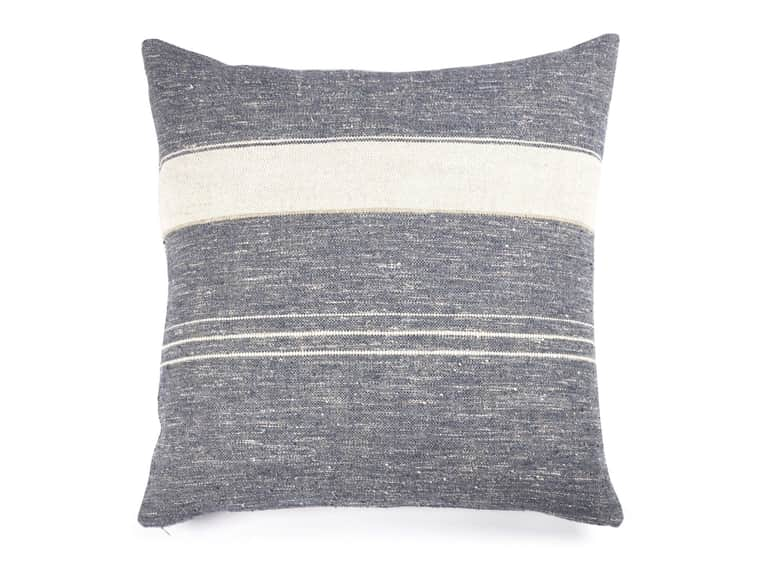
For example, a blue-and-neutral striped decorative cover can supply a small, controlled pattern beside a plain linen sham. The North Sea Stripe Pillow Cover combines a textured blue ground with flax and oyster stripes and is sold as a cover only, with the insert separate. Because it introduces both colour and pattern, it is best used as a deliberate accent rather than one more motif in an already busy arrangement. Check its fibre composition and care directions before combining it with other pillows.
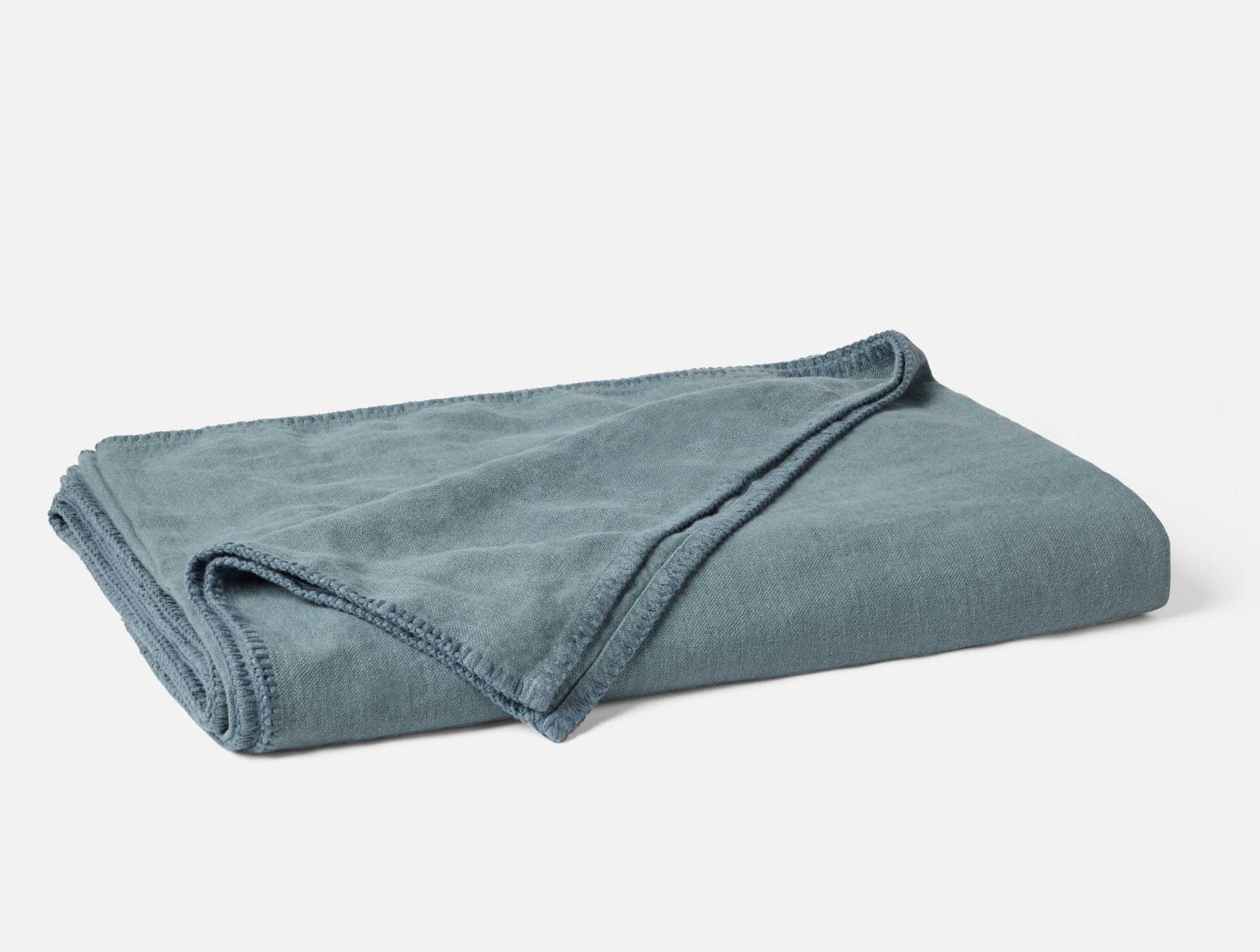
A coverlet can also help connect the layers. A folded linen coverlet across the foot of the bed brings another soft surface into the scheme, but it should not compete with a strongly quilted sham. Keep the palette cohesive and vary texture in a measured way: one quilted element, one smooth surface and one relaxed weave may be all the contrast a room needs.
Check construction, closure and practical details
Small construction details make a difference when shams are used regularly. Look for neat seams and a closure that keeps the insert secure without making the cover awkward to remove. Depending on the design, a sham may open at the back, close with buttons or use another fastening. The product description should clarify how it works, and the opening should be generous enough for the insert you plan to use.
Consider whether the sham has a border or flange and how that affects its finished dimensions. A decorative edge can add useful definition, but it may change the visual scale of the pillow. On a compact bed, a wide border can make the pillow seem larger; on a generous bed, it can help the sham read clearly from across the room.
Also check whether the pillow insert is included. The Bovi Hudson product information describes shams available in multiple sizes, but inserts are not listed as part of the sham set. Confirm the current listing before ordering and choose inserts based on the exact measurements and the fullness you want. A feather insert may create a softer, more easily shaped look; other fills can hold a firmer, more uniform outline. The suitable option depends on preference, intended use and the care requirements of the fill.
Care for shams according to their fabric
Decorative bedding can be easy to live with when its care routine is clear. Always check the item’s own instructions before washing; fibre, colour, stitching and finishing can all change what is recommended. Do not assume that every linen sham can be treated the same way simply because it contains linen.
For the Bovi Hudson Linen Quilted Shams, the available product information describes a stone-washed linen face with cotton percale backing. Follow the care directions supplied with the product, particularly because quilting and mixed-fabric construction can require more attention than a plain pillowcase. Avoid relying on generic washing advice when a manufacturer provides specific instructions.
When care guidance permits machine washing, a gentle cycle and suitable detergent can help limit unnecessary stress on the fabric and stitching. Wash similar colours together, avoid overloading the machine, and use a drying method appropriate to the sham’s construction. Remove decorative pieces from the bed between washes when they are not in use, and keep them stored clean and dry to preserve their appearance.
Quilted items deserve particular care in handling. Avoid pulling sharply on the edges while inserting a pillow, since repeated strain can affect seams. If a sham becomes creased, use only the ironing or steaming method recommended for its materials. With a textured finish, a perfectly flat appearance may not be the goal; preserving the fabric’s natural character is often more attractive than pressing it into an artificial crispness.
A quick guide to choosing the right sham
When you are comparing options, come back to the basics: fit, fabric, finish, care and the role the sham will play in the room. These questions can help narrow the choice:
- Will it fit? Compare the cover dimensions with the insert measurements, not just the product’s size label.
- Does the fabric suit the bed? Linen brings relaxed texture; cotton can offer a smoother, crisper contrast; blended fabrics may introduce more varied surface effects.
- Does the finish complement nearby bedding? Quilting, piping, embroidery and flanges each add a distinct kind of detail.
- Is the care practical? Read the instructions and decide whether the recommended routine fits your household.
- Is the insert included? Check the listing and budget for a correctly sized insert if it is sold separately.
- Will the arrangement feel comfortable to use? Consider how many layers you want to move each night and where they will be stored.
The final touch should feel like you
The most successful pillow-sham choice is not necessarily the most elaborate one. It is the one that fits the insert, works with the bedding, feels pleasant in the room and suits the way you live. Start with accurate measurements, choose a fabric and finish that make sense beside your sheets and duvet, then add layers with a light touch.
The Bovi Hudson shams show how a few considered details can do a lot: European linen brings natural texture, diamond quilting adds depth, and the cotton percale backing introduces a smoother counterpoint. Whether you use them as a quiet finishing layer or the visual anchor of a more tailored bed, the guiding principle is the same: let texture and proportion create interest, and keep the practical details in view.
When size, fabric and arrangement work together, shams do more than decorate the bed. They make the room feel settled, welcoming and unmistakably your own.